Finally, a project planner for students
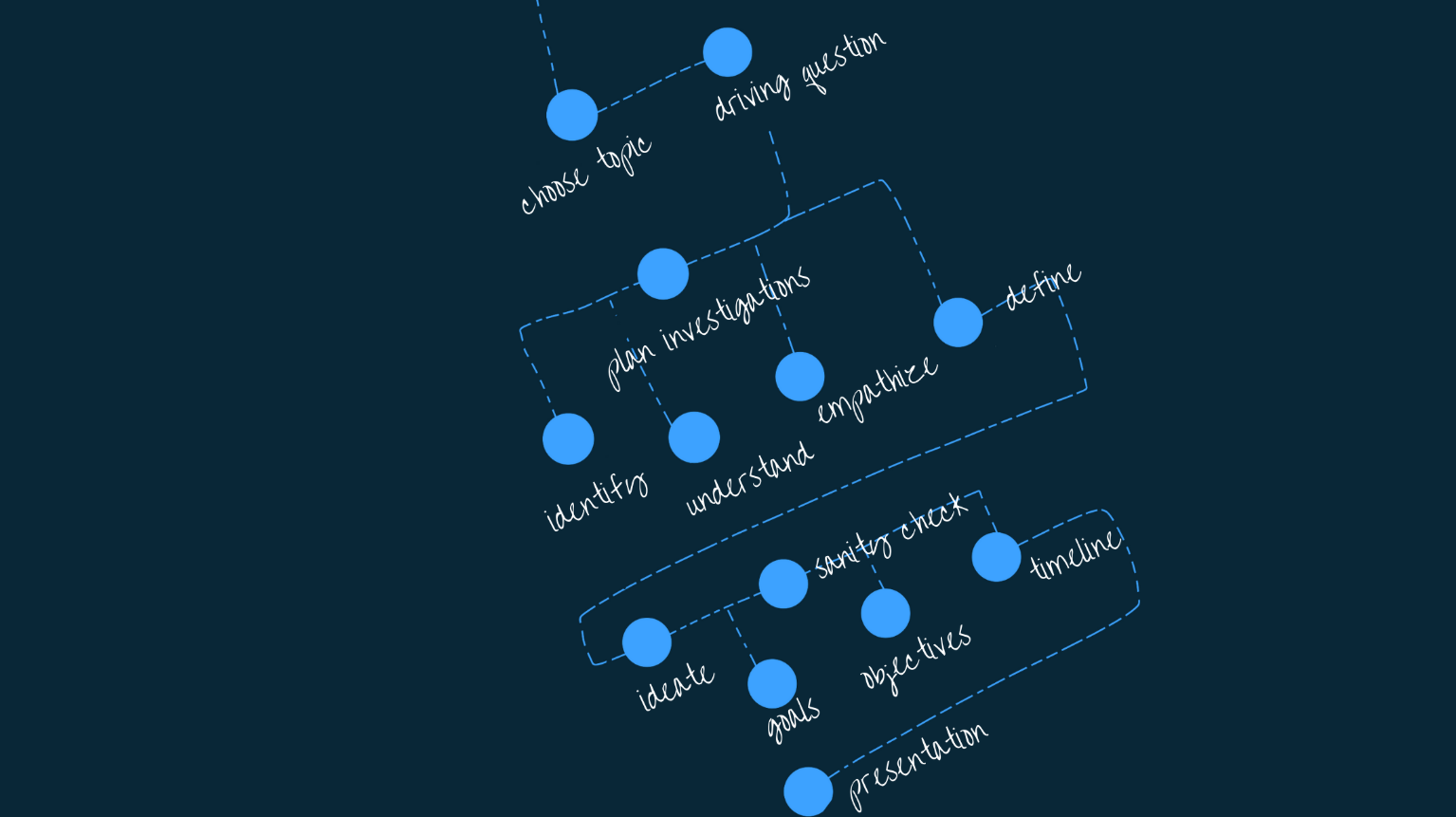 Unit plan. Project plan. Week plan. Lesson plan. Minute plan. As teachers, sometimes it feels like all we do is PLAN. But for all professionals, it's the same. We're asked to manage our time, prioritize, organize, and initiate tasks. Why? So we can be our most productive selves. There are so many tools and resources in cyberspace to help teachers and other professionals plan. Entrepreneurs use a business model canvas, engineers use the design thinking process, scientists use the scientific method, and teachers have unit and lesson plan templates. We all use some form of model, blueprint, or roadmap to guide our plans.
Our schools are getting overwhelmed with buzzwords - agency, student-led, personalized, student-centered, voice, and choice - all emphasizing teachers to give students the opportunity to learn how to learn. But, the agency we all want our students to embrace has to start with a plan. Not a teacher's plan. A student's plan.
But, the agency we all want our students to embrace has to start with a plan. Not a teacher's plan. A student's plan.
So the question naturally follows, do our students have the tools they need to truly plan on their own? To be agents? To personalize their work? To make their voices and choices heard? As an entrepreneur, I frequently get asked what is on our company roadmap. We need to start asking our students what is on theirs. Spinndle's roadmaps guide students through projects without taking away their agency. Roadmaps address the what. Students see the full scope of a project and the milestones along the way. What do we start on? What's coming next? Roadmaps leave the how up to the students, providing them enough structure and flexibility to be self-sufficient. To plan.
 We've put together a library of common project planning pieces, giving students the framework to think like designers, inventors, entrepreneurs, and problem-solvers. With our student planning tools, students can move through important thinking routines central to all student-led learning experiences like PBL, Passion Projects, Design Thinking, STEAM, Maker, and Capstone. What's more, the templates are fully interactive, so Spinndle captures all the iterations of a student's plans along the way.
A Project Planner for Students
First, help students identify their interests, hobbies, passions, goals they wish to pursue or challenges they want to address. What topic holds their interest the most?
Turn interest into a driving question. Help students develop an open-ended question that will hold their attention for a long period of time. Students generate a long list of Need to Know's to identify their gaps in knowledge. Students turn these NTK's into questions.
Now that students have determined a direction for their project that is both relevant and meaningful to them, it's time to organize their investigations. Students turn their driving question into guiding questions. Students then build their resources bank from there.
(Optional - For design thinking projects) Now that students have a list of resources (interview, survey, observations, websites, books, etc.) it is time to assemble a focus group, possible mentors, or audience. Who is affected? Who can help answer these questions?
(Optional - for design thinking projects) Students need to build more understanding of the topic or problem they are addressing. In order to build a greater understanding students can interview, observe, survey or research jobs, pains, keeps, gains.
(Optional - for design thinking projects) It's time to empathize. Students put themselves in the audience/end-users shoes to get a better feel of the problem or job to be done. Students go deeper in their learning and understanding when they take a more "hands-on" approach to their investigations.
Time to define the problem statement. Students put together all their investigations to determine the need or opportunity. Here is where they can determine the work to be done or create something new.
Ideate solutions! Students turn their problem statement into "How might we…" questions to spark innovation.
 Are any of these ideas actually possible? Unique? Students seek feedback, test and sanity check their ideas.